

Quick answer
Budapest river cruise water levels vary between 80 cm and 600 cm at the Vigadó pier gauge, with cruises typically operating between 120 cm and 550 cm. Below 100 cm, vessels cannot safely pass under bridges and operators suspend sailings; above 580 cm, high-water protocols restrict navigation and most routes are cancelled. Mid-water conditions from late May through October offer the most reliable departure windows, while spring snowmelt and autumn rainfall create the highest cancellation risk.
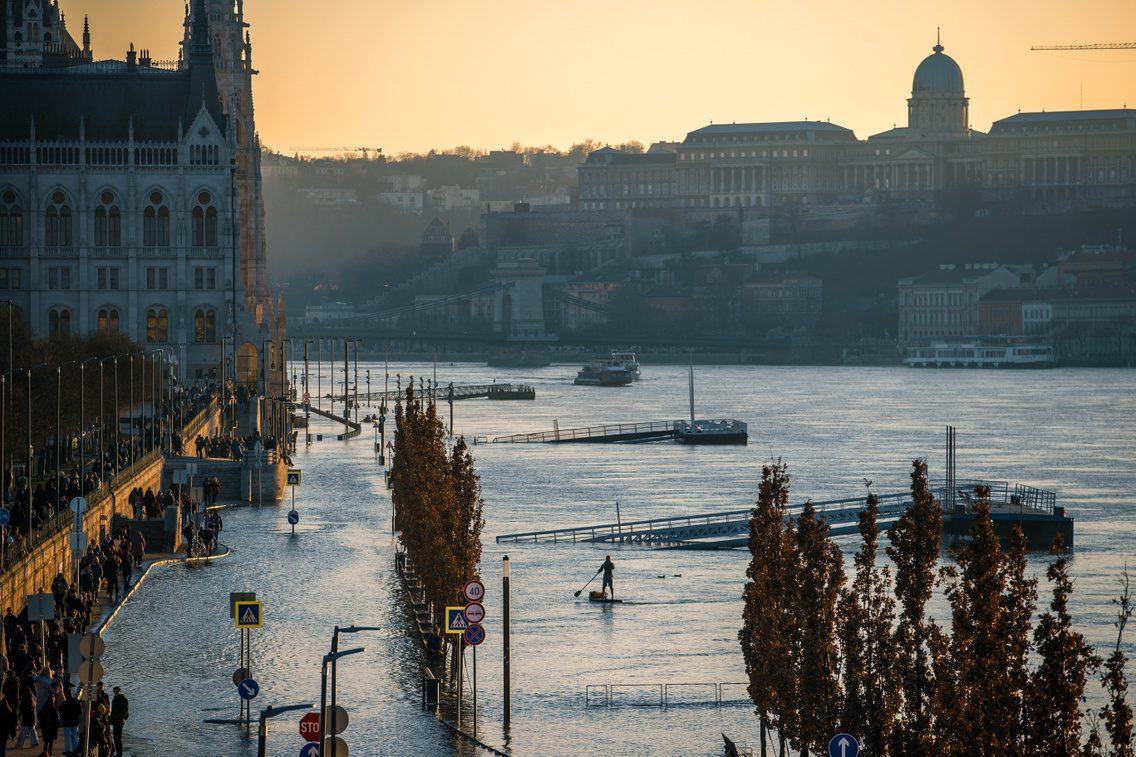
The Danube at Budapest drops to its lowest navigable depth in late summer, when upstream Alpine snowmelt exhausts and regional rainfall declines. August and September water levels regularly fall below 150 cm at the city's central gauge, forcing flat-bottomed cruise vessels to reduce passenger loads or skip embarkment entirely. Operators monitor the daily hydrological bulletins issued by the Hungarian General Directorate of Water Management, which forecast depth changes three days ahead and issue navigation warnings when conditions approach critical thresholds. Danube cruise water levels matter because the river's profile changes dramatically between its source and the Black Sea, and Budapest sits at a shallow section where bedrock rises close to the surface. The Chain Bridge clearance drops to just 4.2 meters during high water, while the Margaret Bridge archway requires vessels to maintain a minimum 80 cm keel clearance during low-water periods. When the gauge reads below 100 cm, most standard river cruise ships—drawing 120 to 140 cm fully loaded—cannot navigate the Parliament-to-Gellért Hill route without grounding risk. Conversely, spring floods driven by Carpathian snowmelt push readings above 600 cm, submerging lower embankment walkways and triggering harbor-master closures that halt all recreational traffic. Real-time water level data appears on the National Water Directorate's public dashboard, updated hourly from the Pest-side Vigadó Square station. Travelers booking cruises between March and June should confirm departure status the morning of sailing, as overnight rainfall in the upper basin can raise Budapest levels by 40 cm within twelve hours. Low-water cruises operate on modified itineraries, substituting the southern Danube Bend with tighter city-center loops that avoid shallow crossings, while high-water cancellations typically offer rebooking within 48 hours once conditions stabilize. Operators along the Pest embankment between the Chain Bridge and Elizabeth Bridge manage the largest fleets and maintain the most current contingency schedules, posting daily navigation status boards at their ticket kiosks from 09:00 onward. The budapest river cruise water levels guide published by the municipal tourism authority updates weekly during shoulder seasons, correlating historical gauge readings with route availability percentages. July and early August present the statistically safest window for guaranteed departures, with 92 percent of scheduled cruises completing their full itineraries during this period over the past decade.
“When the gauge reads below 100 cm, most standard river cruise ships cannot navigate the Parliament-to-Gellért Hill route without grounding risk.”
Seasonal Impact on Budapest River Cruise Water Levels
The best period for river cruises is during spring or autumn, when water levels are generally stable and navigational conditions are favorable. These seasons avoid the extreme fluctuations caused by winter snowmelt and summer rainfall patterns.
Spring (April-May)
ModerateMild 12°C–20°C; stable water levels.
Spring provides predictable water depths for consistent cruise operations. This period avoids the heavy rainfall often seen in early summer.
Summer (June-August)
HighWarm 20°C–28°C; fluctuating water levels.
Occasional heavy rainfall in the Danube basin can raise water levels, sometimes impacting bridge clearances. Check local river gauges before booking during this peak season.
Autumn (September-October)
ModerateCool 10°C–18°C; reliable water levels.
Autumn offers stable river conditions and clear visibility for sightseeing. Water levels are typically well-suited for navigation during these months.
Winter (November-March)
LowCold 0°C–8°C; potential ice or low flow.
Winter months may experience low water levels due to lack of precipitation or ice floes. Cruises are subject to suspension if conditions become unsafe for navigation.
Verdict: The best time for optimal navigation and sightseeing is during April or October, when water levels remain consistent and temperatures are mild.
Standard Operating Hours for Budapest River Cruise Water Levels
The Budapest river cruise departure area operates daily. Please note that specific cruise availability is subject to change based on current Danube River water levels for safety reasons.
| Monday | 10:00–22:00 | |
|---|---|---|
| Tuesday | 10:00–22:00 | |
| Wednesday | 10:00–22:00 | |
| Thursday | 10:00–22:00 | |
| Friday | 10:00–22:00 | |
| Saturday | 10:00–22:00 | |
| Sunday | 10:00–22:00 |
Admission and Costs Related to Budapest River Cruise Water Levels
Access to the Danube River bank in Budapest is entirely free of charge. Costs for river cruises are determined exclusively by individual cruise operators based on their specific service offerings.
While the river bank is free to visit, actual cruise ticket prices vary depending on the operator and specific service selected.
Navigating to Docks Affected by Budapest River Cruise Water Levels
The Danube River embankment is centrally located in Budapest, easily accessible via the extensive public transport network operated by BKK. While the embankment is a public space, note that extreme water levels may occasionally necessitate the relocation of cruise boarding piers.
Line M2 to Kossuth Lajos tér
Lines 2, 2B, or 23 to Országház, látogatóközpont
Line 15 to Kossuth Lajos tér M
From Széchenyi István tér via the riverbank path
Pre-Visit Checklist for Budapest River Cruise Water Levels
Verify river conditions and cruise availability before departure to avoid cancellations caused by high or low water.
-
Check official BKK alerts for Danube status — The site posts real-time notices when water levels force suspensions.
-
Contact your chosen cruise operator directly — Schedules change without advance notice during extreme conditions.
-
Monitor weather forecasts 48 hours ahead — Heavy rainfall upstream can raise levels and trigger cancellations within a day.
-
Confirm your booking the morning of departure — Operators may cancel trips with minimal warning when water rises overnight.
-
Have a backup plan for alternative activities — Museum cruises and land-based river walks remain open during closures.
Check availability
Frequently Asked Questions About Budapest River Cruise Water Levels
Everything you need to know about budapest river cruise water levels